Blog: Communication is indispensable

Communication during roadworks

pre-trip-information-social-media

Communication during roadworks requires more than just fences and traffic signs.

During roadworks, much attention rightly focuses on safe road closures. Clear signage, barriers, and traffic measures ensure that road users and road workers are protected. However, a safe layout alone is not sufficient. Good environmental communication plays an at least as important role during road works.

When road users do not know what to expect, uncertainty, unexpected maneuvers, and frustration arise. This has a direct impact on both road safety and traffic flow. Precisely for this reason, communication is increasingly seen as an essential part of professional traffic management.

Good communication begins before the first cordon

For many motorists, cyclists, and logistics companies, a road closure does not begin at the location itself, but at the moment they plan their route.

When roadworks are announced in good time, road users can:

  • Choosing an alternative route
  • adjust their departure time
  • Allow for extra travel time
  • Preventing unexpected situations

This not only reduces traffic congestion around the works but also fosters greater understanding. People accept inconvenience better when they know why it is necessary and how long it will last.

A simple example is a planned lane closure on a busy provincial road. When this only becomes visible upon arrival, sudden lane changes and braking maneuvers often occur. If the same roadworks are announced a few days in advance via navigation systems, DRIPs, DIBs or if other traffic information has been announced, many road users can already adjust their behavior.

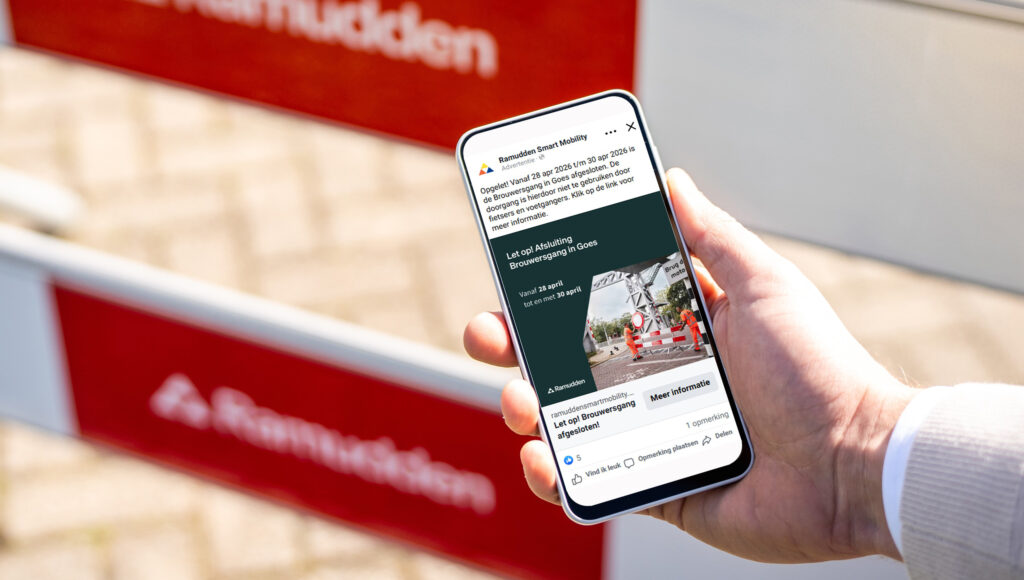
Information must remain up-to-date during the work.

Communication does not stop as soon as the work begins. Situations change regularly. Work runs over schedule, is completed earlier, or requires a modified traffic situation. If communication is not adjusted, confusion arises.

Therefore, up-to-date traffic information is essential. Consider:

  • Dynamic route information
  • Real-time travel time information
  • Temporary speed advisories
  • Digital diversion information
  • Current notifications to navigation systems

By continuously providing road users with the right information, traffic flows remain more manageable and the likelihood of dangerous situations decreases.

Communication during roadworks

Communication contributes to road safety

Good communication has a direct effect on safety.

When road users know in advance that a lane is closing or a speed limit is being adjusted, they have more time to anticipate calmly. This results in less abrupt steering movements, less hard braking, and fewer unexpected traffic jams.

This also means a safer work area for road workers. After all, fewer unexpected traffic movements result in fewer risks around the workplace.

Safety is therefore created not only by physical measures, but also by predictable traffic behavior.

The surrounding area also benefits from clear communication.

Roadworks often affect more people than just motorists. Local residents, business owners, logistics companies, and other stakeholders all have an interest in timely and clear information.

By actively informing these various target groups, greater support for the work is created and unnecessary complaints are prevented.

Data makes communication increasingly smarter

The deployment of traffic data changes the way work is organized.

By analyzing traffic flows in real time, it can be determined:

  • Where traffic jams occur
  • Which diversions function well
  • When additional measures are needed
  • Which communication has the most effect

As a result, communication is no longer based on assumptions, but on current insights. This makes traffic management not only more efficient, but also more predictable.

Therefore, data and traffic management are increasingly being integrated into a single approach in which safety, accessibility, and traffic flow are optimized jointly.

Conclusion

A safe road closure forms the basis of all roadworks, but without good communication, an important part of the solution remains unused.

By informing road users clearly and in a timely manner both before and during works, safer traffic situations, fewer delays, and greater understanding of temporary inconvenience are created.

Smart mobility and data-driven traffic management are making this communication increasingly effective. In this way, technology, data, and road safety jointly contribute to a more accessible and safer public space.

Would you like to know how smart communication and traffic data can contribute to safer and more manageable roadworks? The specialists at Ramudden Smart Mobility are happy to help find a solution that suits your project.

Meet our specialists

Gert_Norg_Ramudden_Smart_Mobility